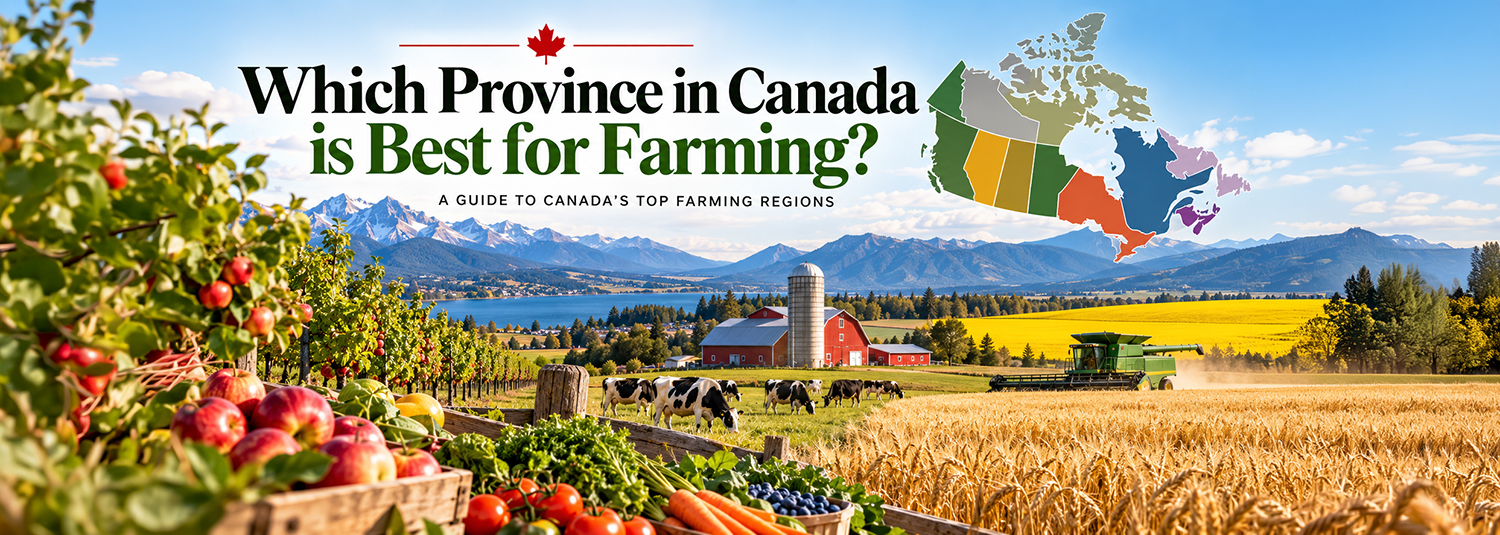
1. British Columbia: Best for Fruit, Horticulture, and Specialty Crops

British Columbia offers diverse growing conditions, from the fruit orchards of the Okanagan Valley to the berry farms and vegetable producers of the Fraser Valley. Its varied climates support many types of specialty agriculture.
What grows well?
- Apples, cherries, grapes, and other tree fruits
- Blueberries, raspberries, and strawberries
- Vegetables, nursery plants, and greenhouse crops
- Grapes for wine production
Why choose British Columbia?
The province offers opportunities for farms producing high-value crops, supplying local markets, and selling directly to consumers. However, land and operating costs can be high in desirable agricultural regions, and water availability varies by location.
Best suited for: Orchard owners, berry growers, market gardeners, greenhouse operators, and specialty crop producers.
2. Alberta: Best for Cattle Ranching and Mixed Farming

Alberta is a major agricultural province with extensive cattle operations, grain farms, and mixed farming businesses. Its agricultural landscape includes prairie cropland as well as grazing land in the foothills and other regions.
What is Alberta known for?
- Beef cattle and ranching
- Canola, wheat, barley, and other field crops
- Hay and forage production
- Dairy and other livestock operations
Why choose Alberta?
Alberta can be attractive for livestock and mixed farming, particularly where land, water, feed supplies, and access to processing facilities suit the operation. Conditions vary significantly by region, and drought risk and water availability should be considered.
Best suited for: Cattle ranchers, grain producers, and farmers combining livestock with crop production.
3. Saskatchewan: Best for Large-Scale Grain and Oilseed Farming

Saskatchewan is one of Canada's major crop-producing provinces, with broad agricultural areas well suited to mechanized field farming. Prairie provinces collectively account for most of Canada's canola and spring wheat crop areas. (Statistics Canada)
Major crops include:
- Canola
- Spring wheat and durum wheat
- Lentils, peas, and other pulse crops
- Oats and barley
Why choose Saskatchewan?
Its large farming areas make it well suited to commercial grain and oilseed production. However, short growing seasons, variable rainfall, drought risk, soil conditions, and the cost of machinery all affect farm economics.
Best suited for: Commercial grain farms, oilseed producers, and pulse crop growers.
4. Ontario: Best for Diverse Farming and Access to Markets

Ontario has a diverse agricultural sector, supported by productive growing regions and proximity to large consumer markets. The 2021 Census of Agriculture recorded 48,346 farms in Ontario, the largest number of any Canadian province. Ontario also led in the farm area devoted to grain corn and soybeans and had the country's largest share of greenhouse production. (Frequently asked questions)
What can you grow or raise?
- Soybeans, corn, and wheat
- Vegetables and fruit
- Greenhouse tomatoes, cucumbers, and peppers
- Dairy, poultry, pigs, and other livestock
Why choose Ontario?
Proximity to cities can benefit farms selling fresh produce, supplying restaurants, or operating farm stands and U-pick attractions. On the other hand, land prices and operating costs can be substantial, particularly near major urban centres.
Best suited for: Diversified farms, market gardeners, greenhouse operators, livestock producers, and farms selling directly to consumers.
5. Quebec: Best for Dairy, Pork, and Maple Syrup

Quebec has a well-established agricultural sector, particularly in dairy farming, pork production, and maple syrup. Its farms range from large commercial operations to smaller producers selling cheese, maple products, fruit, and vegetables.
Major agricultural products include:
- Milk, cheese, and other dairy products
- Pork and other livestock
- Maple syrup and maple products
- Cranberries, vegetables, and other fruit crops
Quebec accounted for 90% of Canada's maple syrup production in 2025, illustrating its importance to this industry. (Statistics Canada)
Why choose Quebec?
The province has established food-processing and agricultural networks. However, French-language requirements in some business contexts, regional climate differences, and land and operating costs are factors to consider.
Best suited for: Dairy farmers, pork producers, maple syrup businesses, and diversified farms serving regional food markets.
6. Atlantic Canada: Best for Potatoes, Berries, and Specialty Agriculture

Atlantic Canada includes New Brunswick, Nova Scotia, Prince Edward Island, and Newfoundland and Labrador. Although its agricultural sector is smaller than those of Canada's major farming provinces, it has important regional specialties.
What is the region known for?
- Potatoes, especially in Prince Edward Island and New Brunswick
- Wild blueberries in New Brunswick and Nova Scotia
- Apples and other fruit
- Dairy, vegetables, and local specialty foods
In the 2021 Census of Agriculture, Atlantic Canada accounted for 35.7% of Canada's potato acreage and more than half of its lowbush blueberry acreage. (Statistics Canada)
Why choose Atlantic Canada?
The region can suit farmers interested in particular crops, local food markets, and smaller-scale agricultural businesses. However, the best location depends on soil, drainage, weather, processing facilities, and access to buyers.
Best suited for: Potato growers, blueberry producers, orchard owners, and specialty food businesses.
7. What About Manitoba?

Manitoba deserves consideration alongside Saskatchewan and Alberta. Its agricultural sector includes grain and oilseed production, livestock, potatoes, and other crops.
The province's prairie landscape supports commercial field farming, while particular regions offer opportunities for diversified agriculture.
Best suited for: Grain and oilseed producers, livestock operations, and farmers seeking a mix of crop and animal agriculture.
What Should You Consider Before Choosing a Province?
Before purchasing land or starting a farm, evaluate these factors:
- Land cost: Compare purchase prices, rental costs, and the amount of productive land available.
- Climate and growing season: Research frost dates, rainfall, heat, and winter conditions for the specific area.
- Water access: Check irrigation availability, water rights, and drought risks.
- Market access: Consider nearby cities, wholesale buyers, processors, farmers' markets, and farm-gate sales.
- Infrastructure: Look into electricity, roads, storage, equipment suppliers, and agricultural services.
- Regulations: Investigate zoning, permitted agricultural uses, environmental rules, and any required licences.
- Labour and financing: Estimate operating costs, seasonal staffing needs, and the capital required to get started.
A province with relatively inexpensive land may not be the most profitable choice if it lacks the climate, water, infrastructure, or customers your operation needs.
Final Thoughts
There is no single best province for farming in Canada. Saskatchewan is a strong choice for large-scale grain production, Alberta for cattle and mixed farming, Ontario for agricultural diversity and market access, Quebec for dairy and maple syrup, and British Columbia for many fruit and specialty crops. Atlantic Canada also offers important opportunities in potatoes, berries, and other regional specialties.
The best province is the one that fits your agricultural goals, budget, land requirements, and target market.
For reliable information before making a decision, consult the Statistics Canada Census of Agriculture and Agriculture and Agri-Food Canada. Their reports provide detailed information about farming by province and commodity.
Editorial note: The agricultural descriptions above are based on official Canadian agricultural statistics and government reports. The “best suited for” labels are practical summaries, not official rankings of profitability.